

COUNCIL LICENSED BASSET HOUND, SHOW TYPE COCKER SPANIEL, WELSH PEMBROKE CORGI BREEDER AND STUD SERVICE PROVIDER IN CUMBRIA


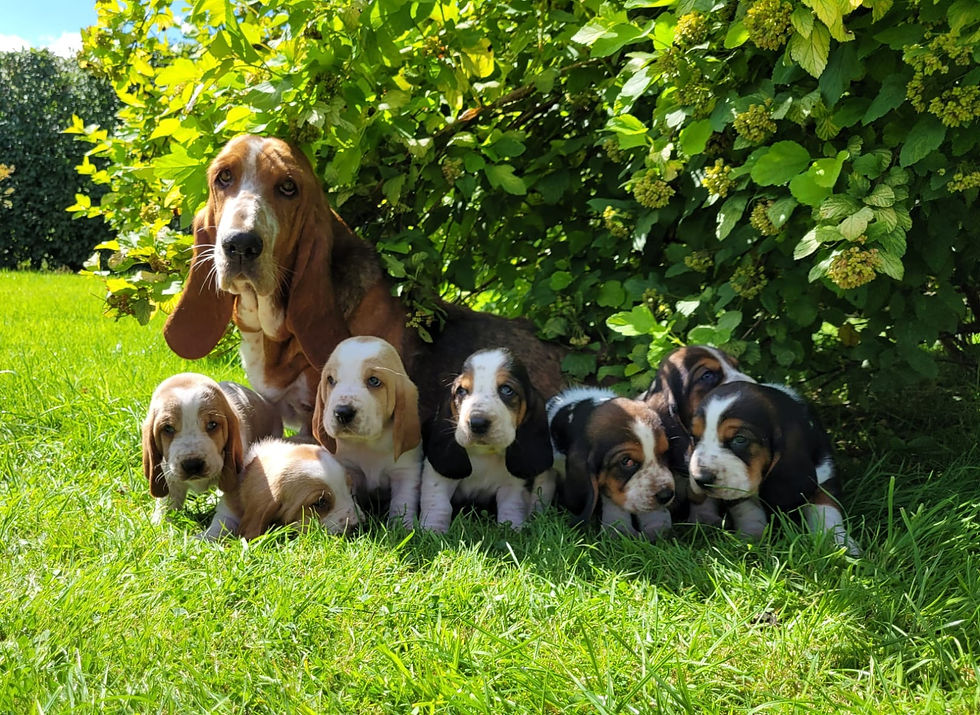
Girls
We are lucky that we have been able to keep some home bred girls, it means we’re so proud of our girls we can have multiple generations – yes that does mean that we need to source a new stud dog – we’re on it! Watch out for our new boys.
Not all our girls are home bred – and it’s good to add some new blood sometimes. It’s exciting for us to talk to other breeders – reassure them we really are passionate and love ALL our dogs – it’s a massive commitment and undertaking and we do it with their best interests at heart – ALWAYS.
Our Basset Hound girls - Molly, Annie, Pamela,
Dame Shirley Basset and Stacey
If you're interested in Molly, Annie, Pamela, Dame Shirley Basset or Stacey, call us on 07503 634479 or email us or chat.
Molly
Our lovely home bred girl, very friendly, quiet and unassuming - her favourite person in the whole wide world is my husband Adrain and she'll follow him to the end of the earth, ignoring me completely!
Annie
Molly's litter sister is more vocal and more lively! A very friendly girl who loves company.
Pamela
Also home bred, she's Lenny's daughter (as are Molly and Annie). She's our 3rd generation girl and being a Basset, can be stubborn but being so loving, she gets away with it!
Dame Shirley Basset
Another home bred girl, she's short and compact like her mother Nessa. Loves sleeping and cuddles, not at all diva like her namesake!
Stacey
Where do we start?! VERY Basset - stubborn, strong willed and drives us crazy!It's a good job she's loyal and loving. She's incredibly friendly and loves to be with you - maybe because there's a chance you might have food.


About Basset Hounds
Basset Hounds are substantial dogs on short legs. From the scent hound group, this breed was originally used for hunting small game but are now popular as family dogs due to their relaxed and affectionate demeanours
Personality
Despite looking morose and serious, the Basset Hound dog breed is sociable, calm, polite and quietly playful. Affectionate with people they know and reserved with others, they love children and get on well with other dogs and with some training, other animals in the home. They are very companionable dogs who hate to be left alone and so always need some company - whether human or canine.
Training
The Basset Hound looks on training with some amusement and largely feels it is a pointless exercise. As they tend to go deaf when they find a great scent, training them to walk on a harness and lead is important as once in the great outdoors their recall is likely to be less than reliable, no matter how much time you spend training.
The Basset Hound excels is in scent work so find a training class that will help you explore and celebrate your dog’s strengths and never focus on their training failings
Exercise Needs
About an hour's daily exercise is needed. Basset Hounds can tend to be lazy if given half a chance, but they do need exercise to ensure they do not put on too much weight, which can cause back problems in later life. During the rapid growth periods, however, exercise must be limited as joint complications may occur. Because of the length of their bodies, Bassets should not be allowed to go up and down stairs until they are 18 months old.
As well as walking exercise, regular/daily scent work enrichment is a real joy for these dogs.
Source: purina.co.uk


Our Show Type Cocker Spaniel girls - Brie, Ruma, Tiggy and Cracker.
If you're interested in Brie, Ruma, Tiggy or Cracker call us on 07503 634479 or email us or chat.
Brie
Our lovely home bred girl is quite quiet and yet very playful. Her best friend is Lucy, our Chocolate Labrador. She's the one usually by my side walking around the field - until there's something to chase, like a swallow!
Ruma
Our cheeky, naughty Cocker - usually found ratching around in the hedgerows (typical Cocker trait) or with her head down a hole (she'll make it bigger if it's not big enough!) But she's the kindest, sweetest girl - even if I do have to bath her very, very often!.
Tiggy
Our only orange roan girl - believe it or not, she's Brie's full sister but not from the same litter. Her favourite game is chasing Dandy (our Orange Roan cocker boy). she even does lap after lap of the field we're walking in - just for fun!
Very energetic and full of life, her best friend is Dandy and they're usually not far away from each other.
Cracker
She's definitely our little firecracker!
A beautiful red sable girl who came to join us - my then stud dog Winston was her father. She's a cuddle that's for sure - she can also be a little pocket rocket, flaying around the fields!
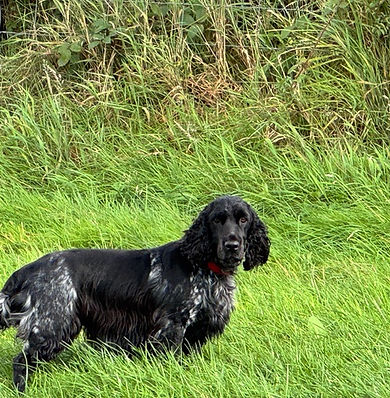


About Cocker Spaniels
The Cocker Spaniel puppy weighs about 1.4 kg but can get to a weight of 13 – 14.5 kg in adulthood. Their coats are flat and silky with plenty of feathering on the front legs. The Cocker Spaniel colours can range from black, red, orange, and brown, to different combinations of two or more colours.
They have a certain regal appearance with their ears being long and feathered and their coats, beautifully thick and wavy.
Personality
The Cocker Spaniel is a busy, friendly dog who thrives on human companionship, wanting nothing more than to please their owners. They are ideal pets where there are children about and they get on well with other household animals.
Cocker Spaniels are a very happy breed, constantly wagging their tails and always on the go. They are easily trained, being both clever and eager to learn.
Training
This is an active dog who will need training if you want any hope of a quiet life! A Cocker Spaniel puppy, or a fully grown adult, are a joy to train, though, as they are intelligent and love working with their owner — but they will learn bad habits as quickly as good ones so reward-based training should start early and be ongoing.
This is a great breed for dog sports such as agility or even pet gundog work — and they will love having an active job to do. They will enjoy scent work games too.
It is important to train a Cocker Spaniel to enjoy handling and grooming (as they will need a lot of it) and to happily give up any prizes they may rather hold onto — always using positive, reward-based methods. While a Cocker Spaniel puppy will need less grooming, it’s best to start when they are young so you can get them used to it.
Given they have a working gundog background, they should be well socialised with cats (who they can learn to live with happily) but watched with caution around other small animals and birds.
Source: purina.co.uk

Our Welsh Pembroke Corgi girls - Thelma and Louise.
If you're interested in Thelma or Louise, call us on 07503 634479 or email us or chat.
Thelma
Gentle and quiet, this sweetie is very loving and adores her cuddles (as long as you don't want to give her a worming tablet - then she turns into the Tasmanian devil!)
Louise
Thelma's litter sister. More confident and in your face than Thelma, this whirlwind never stops! she's cheeky and naughty (but in a good way). Luckily she's very affectionate and loves her cuddles with me.


About Welsh Pembroke Corgis
Devoted and affectionate to their owners, they can sometimes be fairly disinterested in strangers. Generally obedient and active, whilst small in height this should properly be considered a larger dog on very short legs rather than a little dog.
Bold and outgoing, friendly and loyal, they make excellent watchdogs and suit an active home. Keep in mind their livestock driving ancestry, which has been known to mean groups of people, particularly children, are herded together regardless of their wishes!
Exercise Needs
Bred to walk or trot miles and be willing to deal with stroppy cattle, the Pembroke Corgi has plenty of stamina. An hours exercise per day at the very least, ideally more, will suit the Pembroke well. If you have nothing for your Pembroke to herd, consider activities such as ‘Treiball’ or ‘sheep ball’ where the dog herds large inflatable exercise balls. Whilst the Pembroke won’t make a great running partner, they will ideally suit those who enjoy long country walks or rambles.
Training
With the right motivation of treats, toys and opportunity to herd things the Pembroke Corgi can be a fun dog to work with. A sense of humour is required and their short-legged, long backed physique will rule out some activities, but they have excellent brains, which need to be kept occupied with a variety of training games and puzzles.
Source: purina.co.uk